
It’s that time of year when projects get going or general tidy up’s take place. You might be thinking of hiring a skip and unsure of the best size to book. Here’s a straightforward guide to help you make the right choice.
Mini skip (2-3 cubic yards)
Good for: Small garden clear-outs, a single room’s worth of furniture, minor bathroom or kitchen clearances.
What fits: Roughly 25-35 bin bags, or the equivalent in loose material. Think half a garden’s worth of prunings, the contents of an old shed, a couple of pieces of furniture.
Midi skip (4 cubic yards)
Good for: Larger room clear-outs, full garage and shed clearances, mid-sized garden projects.
What fits: Around 40-50 bin bags equivalent. A full bathroom rip-out, a well-stocked garage clear out, a garden renovation.
This is often the sweet spot for a thorough house or garden clearance where there’s no particularly heavy material involved.
Builders skip (6-8 cubic yards)
Good for: Full house clearances, renovation projects, larger construction or landscaping work.
What fits: 60-80 bin bags equivalent, or the output from a substantial kitchen, bathroom, or extension project.
The most common skip for any serious renovation or whole-property clearance.
Roll-on roll-off (20-40 cubic yards)
Good for: Major construction projects, large-scale commercial clearances, demolition work.
This is trade-grade. Not generally needed for a domestic clear-out unless you’re doing serious structural work.
Other things that affect the decision
Weight matters just as much as volume It’s easy to look at a skip with a bit of space left at the top and assume you can keep filling it. However, weight limits aren’t just a rough guideline—they are strict legal thresholds. Our standard collection lorries have a maximum legal gross weight limit of 18 tonnes, which has to cover the lorry, the skip, and your waste.
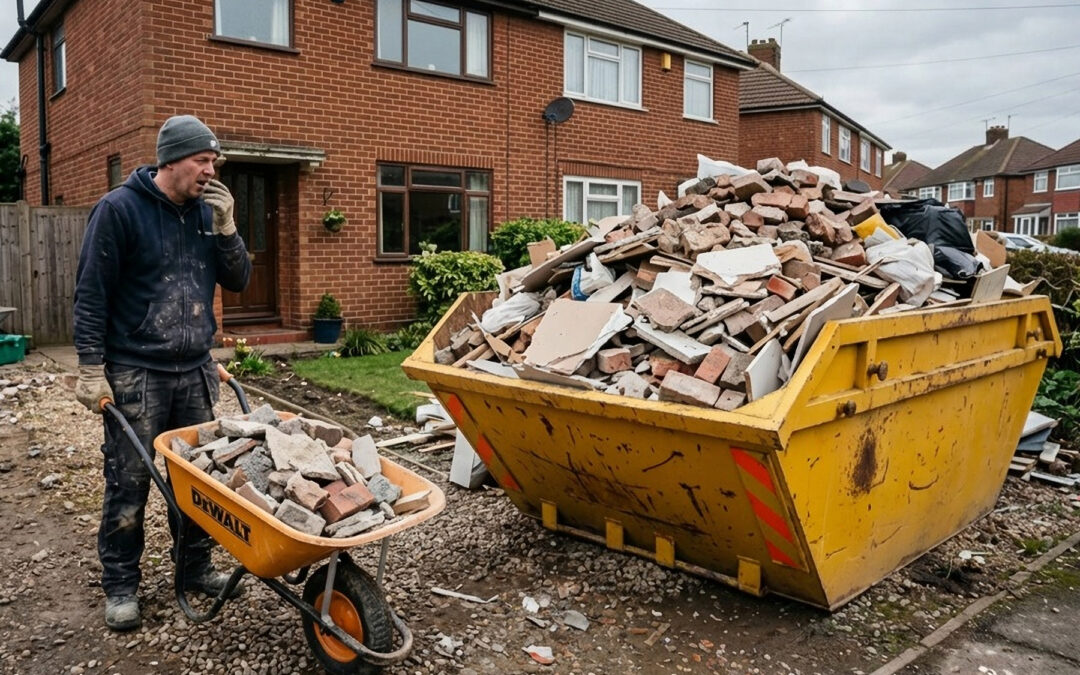
Here is a handy rule of thumb: one cubic yard equates to about one metric tonne of waste (roughly 340 standard house bricks). Heavy, “inert” materials like soil, concrete, and rubble are nearly three times denser than standard household rubbish. Because of this, the absolute largest skip you can hire for heavy waste is a 6-yard skip. Anything larger would exceed legal weight limits long before it looks physically full.
If a skip is overloaded, our drivers are legally required to refuse collection. This isn’t us being difficult; it’s because overweight vehicles cause disproportionate damage to road infrastructure and pose severe safety risks. Refused collections result in extra fees, project delays, and even legal liability for the hirer if an overweight load causes an accident. Tell us exactly what you’re putting in, and we’ll advise you on the right choice to keep things moving smoothly.
Access matters too Smaller skips are easier to position in tight driveways. If you need the skip on the road, you’ll need a permit, which we can sort. Larger skips need more room for delivery and collection, so it’s worth measuring up.
Respect the fill line Every skip is strictly “level load” only. While it’s tempting to balance old doors on top or build a tower of garden waste, it’s illegal for us to transport an overfilled skip. If the waste sits higher than the sides, our safety nets won’t cover it securely for the journey. Our drivers will have to refuse the collection until you take the top layer off, so it’s always best to order a size up if you’re unsure.
Please, no fires Sometimes people think lighting a fire in a skip is a clever way to make more room for rubbish. It’s not! Burning waste in a skip is illegal, extremely dangerous, and ruins the container. The extreme heat strips the paint and permanently weakens the metal. If a skip is damaged by fire, you will be billed for a replacement, which is a surprisingly expensive mistake.
Still not sure?
Call us. It sounds obvious, but the easiest way to avoid hiring the wrong size is a two-minute conversation first. We cover Norwich, Beccles, Lowestoft, Great Yarmouth, and most of Norfolk and Suffolk.